
Concerns Over Defence Investment Plan
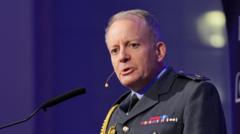
The chief of the UK's defence staff, Air Chief Marshal Sir Richard Knighton, has issued a warning that the nation's armed forces may be forced to scale back essential training and operational activities if they do not receive a more substantial financial allocation than currently planned. Sir Richard, who took charge in September, indicated that the government's Defence Investment Plan (DIP) lacks sufficient short-term funding for crucial 'day-to-day activities.'
Former Defence Secretary's Resignation and Warnings
These concerns echo those raised by former defence secretary John Healey, who resigned last week. Healey stated his resignation was driven by the belief that the proposed financial settlement 'would reduce the readiness of our Forces and increase the risk to personnel on operations.' In a statement to the Commons, he emphasized that his decision was 'about our country, not career,' and criticized Chancellor Rachel Reeves for what he perceived as an 'unwillingness' to provide adequate funds, noting that 'our adversaries do not follow timetables set by the Treasury.'
Healey has advocated for the UK to commit 3% of its Gross Domestic Product (GDP) to defence by 2030, a figure he believes many NATO allies will surpass. He highlighted that the current investment plans fall 'well short' of what is needed, with a minimal increase of 0.08% from next year until 2030, and no clear timeline to reach 3% or 3.5%.
"At this dangerous time, I see the current defence investment plans falling well short of what is required, a rise at 0.08% from next year to 2030, no date for reaching 3%, no path to 3.5%."
Echoed Concerns from Military Leadership
Sir Richard Knighton reiterated these sentiments during his testimony to the Lords International Relations and Defence Committee. He expressed particular apprehension regarding the funding for 'day-to-day activity,' which supports operational readiness, exercises, and training. He explained that without an increase in this 'resource departmental expenditure limit,' these critical areas would face significant pressure, impacting the preparedness of service personnel.
The DIP, which was expected last week, has been delayed following Healey's resignation. It is reported that No 10 and the Treasury were prepared to allocate approximately £10 billion in additional funding over the next four years, a figure reportedly £18 billion less than what military leaders had requested. The new defence secretary, Dan Jarvis, is currently reviewing the spending plan, but there has been no indication of further additional funds from No 10.
Further Resignations and Government Response
Following Healey's departure, armed forces minister Al Carns also resigned, citing that the DIP's investment level was 'inadequate to the task' of national defence. Carns also noted that the plan did not sufficiently address drone warfare, focusing too heavily on traditional defence hardware.
Despite these concerns, the Prime Minister stated that the government is increasing the defence budget from 2.3% of GDP to 2.6%. Speaking at the G7 summit, the PM asserted that the DIP would provide the UK with 'capability for the future' and that funds had been reallocated from other departments to defence. The Prime Minister added that discussions are ongoing with the new defence secretary regarding spending priorities for the allocated funds.
Source: UK forces face operational cuts without more cash, defence chief warns